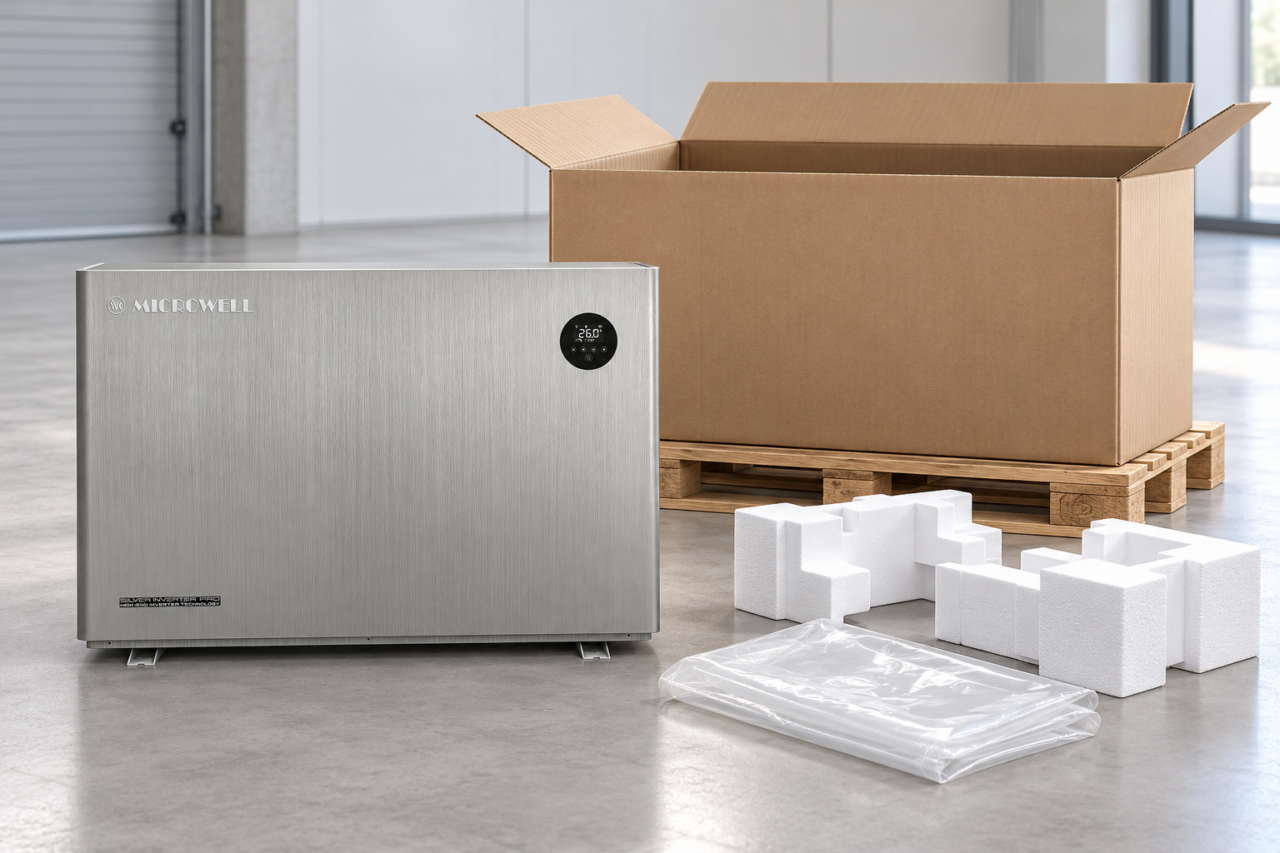
Recyclable Microwell packaging: what’s inside the box of a DRY dehumidifier and an HP heat pump?
investigations
Oct 12, 2026
When delivering a dehumidifier or heat pump, packaging has a clear purpose: to protect the equipment during transport, storage and handling. But its story does not have to end once the box is opened. The materials can be recycled, and the wooden pallet can be reused.
At Microwell, we also pay attention to what accompanies our technologies on their journey to the customer. Responsibility starts with packaging and continues with proper waste sorting after installation.
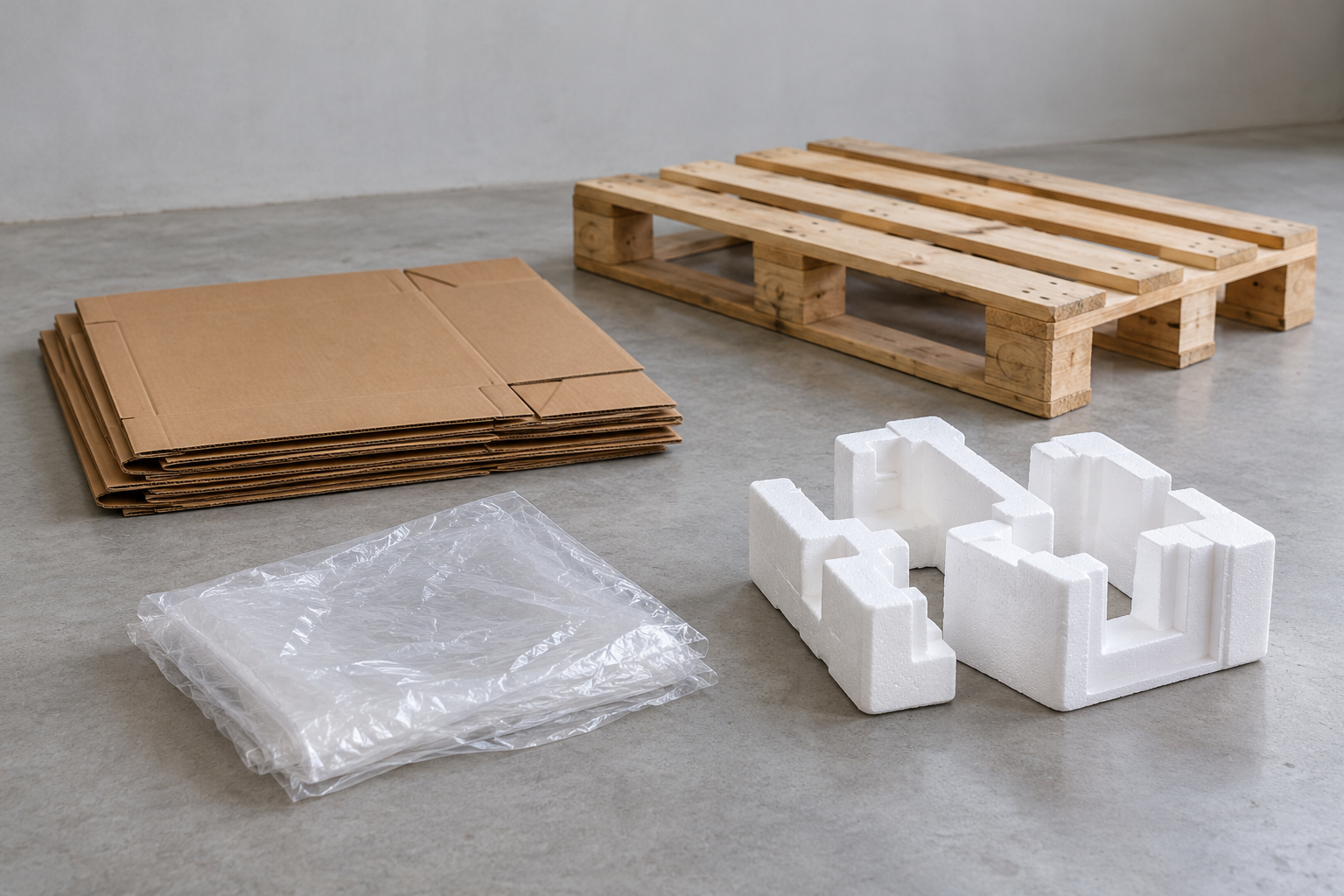
What makes up Microwell DRY and HP packaging?
The packaging for Microwell DRY dehumidifiers and Microwell HP heat pumps contains four main materials. Each serves a specific purpose in protecting or handling the equipment.
Material
Role in packaging
What to do after unpacking
Cardboard box
Protects the outside of the equipment
Separate from other materials and place in paper recycling
Plastic film
Protects surfaces and packaging
Take to an appropriate plastic packaging collection point
Polystyrene protective inserts
Absorb impacts and keep the equipment securely in place
Take to a collection point or recycler that accepts packaging polystyrene
Wooden pallet
Enables safe handling and transport
Reuse or send for wood recycling
Are Microwell packaging materials recyclable?
Cardboard, plastic film, polystyrene and wood are recyclable materials. However, to actually be recycled, they must be separated and sent to an appropriate collection and processing system.
A material being recyclable does not mean that every collection system accepts it. For plastic film and polystyrene in particular, check local rules or the requirements of your contracted waste processor. Material cleanliness and any contaminants also play a role.
One simple step after unpacking—separating the individual components—helps preserve their value for further processing.
Why do we use protective packaging?
Dehumidifiers and heat pumps are technical devices that need protection against impacts, movement within the packaging and surface damage.
The cardboard box, film, polystyrene inserts and pallet work together to ensure safe delivery. Protecting the product also has practical benefits for resource efficiency: damage during transport can lead to repairs, replacement parts or additional transport.
When handling packaging, it is therefore important to consider both its role during delivery and its potential for reuse or recycling after unpacking.
How should packaging be sorted after installation?
After unpacking the equipment, we recommend the following steps:
Separate the cardboard, film, polystyrene and wooden pallet. Sort any loose tape and straps by material.
Flatten the cardboard. This saves space during storage and collection.
Collect film and polystyrene separately. Check which local collection point or waste processor accepts them.
Assess whether the pallet can be reused. An undamaged pallet can be used for further handling or transport.
Send the materials for collection according to local rules. Businesses can use their contracted waste management provider.
If materials are awaiting collection or reuse, store them separately in a designated area. Keeping the space tidy makes handling and subsequent collection easier.
How does packaging relate to ESG and supplier assessments?
When assessing suppliers, companies also consider the materials used and how waste is managed. Packaging information can provide useful input for the environmental component of ESG, internal audits and installation planning.
For distributors and installation companies, a clear overview has practical value: they know which materials will remain after installation and what collection arrangements they need to make.
Recyclable packaging is one tangible aspect of a responsible approach. Assessing an entire product or company also involves other topics, such as operation, service life, servicing and handling equipment at the end of its useful life.
PPWR: greater attention to packaging
The European Packaging and Packaging Waste Regulation, known as PPWR, focuses attention on packaging, its material composition and opportunities for reuse and recycling.
For Microwell customers, the practical basics remain simple: understand the packaging materials, separate them after unpacking and send them to an appropriate collection system. Clear packaging information helps customers take this step correctly.
Responsibility continues beneath the equipment casing
Packaging is the first part of a delivery that customers encounter. The next consideration is the Microwell equipment itself and the materials it contains.
These include aluminium and copper in heat exchangers, metal or plastic casings depending on the model, and electronic controls. Their treatment at the end of the equipment’s service life deserves separate attention, including professional dismantling and sending electronics to an appropriate e-waste collection system.
The next time you unpack Microwell equipment, take a moment to consider the packaging too. Separate the materials, reuse the pallet and give these resources a chance to serve again.
Frequently asked questions
What materials are used to package a Microwell DRY dehumidifier or HP heat pump?
The main materials are a cardboard box, plastic film, polystyrene protective inserts and a wooden pallet. Their quantities and specific design depend on the model and delivery method.
Is Microwell packaging recyclable?
The main materials listed—cardboard, plastic film, polystyrene and wood—are recyclable. Actual recycling depends on proper separation, cleanliness and the availability of suitable collection and processing facilities.
What should I do with the cardboard box after unpacking?
Separate the clean cardboard box from the film and protective inserts, flatten it and place it in paper recycling according to local rules.
Where should the plastic packaging film go?
Separate the film from other materials and send it to a plastic packaging collection system that accepts that type of film. For business deliveries, check the requirements with your waste processor.
Can protective polystyrene packaging be recycled?
Yes, packaging polystyrene is recyclable. However, not every collection system accepts it. Take it to a collection point or waste processor that provides collection and processing for this material.
What should I do with the wooden pallet?
If the pallet is undamaged and suitable for further use, it can be reused. Once it is no longer usable, send it to an appropriate wood collection and processing system.
Why should the individual packaging components be separated?
Mixing materials makes sorting more difficult and may limit recycling options. Separated cardboard, film, polystyrene and wood can be sent more easily to the appropriate processing streams.
Is an overview of packaging materials useful for ESG or an audit?
Yes. It can support the environmental component of a supplier assessment and waste management planning. For a more detailed assessment, material weights and documentation for the specific packaging should also be included.
Does recyclable packaging automatically mean compliance with PPWR?
No. Recyclability is one characteristic of packaging. Assessing PPWR compliance also involves other requirements applicable to the specific packaging and the relevant implementation stage of the regulation.
Can Microwell equipment itself also be recycled?
A large proportion of the metal and plastic components can be recovered for recycling after professional treatment. The complete unit should be sent to an authorised e-waste collection system. Electronics and the refrigeration circuit require specialist handling.
AI-generated visualisations are for illustrative purposes. The packaging and workplace shown may differ from the actual setup.